Tag Archive for: THE PLAYERS Championship

The Players: Everything, Everywhere, All at Once

It started off with a few guys sitting at Silver’s Drug Store talking about having a golf tournament.  It’s been called the Greater Jacksonville Open, the GJO, the Tournament Players Championship, TPC, The Players Championship and The Players.  It’s been known as a destination, a reunion spot, and for the Swingers Tent.  And I once called it a love story.  Whatever you call it, and however you view the golf tournament played here in town every year, when you attend you realize it’s everything, everywhere, all at once.

When then-PGA Tour Commissioner Deane Beman was looking for a permanent home for the Tour’s flagship event, Jacksonville’s volunteer force impressed him and after a failed attempt to buy Sawgrass Country Club (along with Marriott) the Fletcher Brothers offered the land for a golf course and headquarters across the street for one dollar and the opportunity to develop the property around it in the future.

All of that is well documented in articles, TV stories and books over the past forty-five years since the tournament found its permanent home.  And while Beman was looking for a spot for a premier and perhaps a major golf tournament, people in North Florida had a whole different idea.

With the tournament in Pensacola going out of business, the founding group here of the GJO, (John Tucker, Wesley Paxon and others) recruited the guy running the event in the Panhandle to handle some of the nuts and bolts of the competition.  The Tour wasn’t fully formed at the time, but the standard stop was played at a country club somewhere, with the members of that club running the show.  The group here though, had other ideas.  While they chose Selva Marina as the initial venue, (with stops at Deerwood and Hidden Hills along the way) they decided to get clubs and golfers from all over North Florida involved.  Most were members at San Jose Country Club, but they invited some of the players at Timinquana (a big rival at the time) to join the process.  They recruited the golf associations at Sawgrass and other clubs in the area to be a part of it, truly a GREATER Jacksonville Open.

Soon a car dealer donated vehicles for the week for the players.  Steel posts and rope were donated for crowd control.  They built hospitality tents, unheard of at the time, to entertain clients and friends.

And word got out.

Much like the Florida/Georgia game, the competition on the course bred a cultural happening.

While the initial stops of the GJO have their share of stories (a well-known, contending golf professional with a late tee time on Thursday emerging from the bushes at Deerwood for his early tee time on Friday wearing the same clothes) and Sawgrass Country Club earning a reputation for its difficulty the first week of March, it wasn’t until the tournament moved to its permanent home in 1982 that things started to change.  Tucker, held over by Beman to oversee the transition from GJO to TPC, had big ideas and the tournament started to expand.

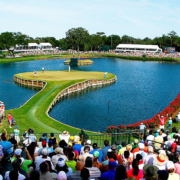
Using the PGA Tour’s leverage, instead of a local car dealer providing vehicles, it was the major manufacturers who jumped on board. Priding itself as the “strongest field in golf,” it didn’t hurt that Jack Nicklaus was a three-time winner of the event and the best players in the world showed up year after year. The seventeenth hole gained an international reputation.  Test or gimmick?  The tour didn’t care; people were talking about it.  CBS had the most recognizable golf coverage with Pat Summerall and Ken Venturi anchoring, giving the tournament even a higher stature.

Beman didn’t like the competition for TV space with the NCAA’s March Madness, so when the TV contracts came up, NBC offered to showcase the event as one of their biggest. More hospitality tents popped up around seventeen and eighteen.  Then sixteen and beyond.

There was a conscious push to make The Players a “Major”, but the golf establishment balked.  So being the first “significant” tournament seemed to be enough for a while.  Tucker was replaced by Henry Hughes, a PGA Tour insider from the Northeast, and you could feel the tournament becoming less local and more a part of the Tour’s “Championship Management.”  While the city of Jacksonville was engaged for a while (a replica of the seventeenth hole was erected at the Landing) eventually the new Commissioner Tim Finchem wanted to raise the TPC’s stature internationally.  Ads for attending next year’s Players dotted the NBC broadcast.  There was no mention of Jacksonville and little coverage of the beaches and surrounding area.  The focus was on the golf tournament. PGA Tour Blue covered every tower and structure you could see, mimicking Augusta Green at the Masters.

But Jacksonville and North Florida sports fans wouldn’t stay away.  People who had never watched golf and certainly had never been on a golf course found their way to Ponte Vedra for a day or two.  Friday afternoons became a “must attend” for single men and women gathering behind the seventeenth and eighteenth greens.  Outfits and sun dresses were picked out, the right logo on the golf shirt was part of the decision making, and no work was getting done in town on Friday of TPC.

Grounds tickets were fine, and available, but all of the sudden, “Benefactor” tickets were all the rage.  More hospitality tents surrounded the amphitheater at sixteen and seventeen, even changing how the seventeenth hole was played.  The wind was still there, but you couldn’t feel or see it unless you looked at the flags on top of the tents surrounding play.

Tuesday became a hot day at the Tournament.  Originally billed as Military Appreciation Day, President George H.W. Bush attended once, followed by a concert.  Top artists like Toby Keith were recruited and the event shifted from the clubhouse lawn to a barge in the lake at seventeen.  Throngs of people started showing up for the concerts and the acts became the Tuesday focus.  Darius Rucker, having left Hootie and the Blowfish and turned country, was a headliner.  Looking to broaden their audience, the Chain Smokers were booked and this year Ludacris cleaned up some of his songs and expanded the fan base even more.

The Tour came to its senses and re-engaged with the city, realizing that local ticket sales were the lifeblood of the tournament.  Local vendors were asked to join the party. Fun names like “Wine and Dine on Nine” and “Tacos on Twelve” became tournament buzzwords.   Vodka brands competed for a spot on the grounds as the “official” vodka of The Players.  Commissioner Jay Monahan help fold The Players back into the community.

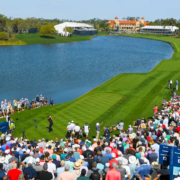
It doesn’t matter where you go on the TPC’s Stadium Course during the tournament, something’s happening there.  From the first tee to the ninth green, from the tenth tee to behind eighteen, there’s a buzz, sometimes audible, but always with an undercurrent of just being there.  They’re keeping the actual number under wraps, but about 50,000 fans fill the grounds hole after hole.  Perhaps they’re limiting the ticket sales, but for the first time, the Tour declared Friday, Saturday and Sunday sell outs in 2026.

New PGA Tour CEO Brian Rolapp, a veteran of the NFL’s ‘nothing but the best’ culture, has been impressed with the whole operation of The Players according to Tour insiders.

Maybe somebody should tell him about the GJO, the TPC, the history of the tournament and how Jacksonville and North Florida works

He wouldn’t be surprised.
Do’s and Don’ts of The Players

There was a lot of talk this week about what you can and can’t do at The Players Championship.

First of all, you can get a ticket. Even with just about eight-thousand tickets sold there were enough floating around that if you wanted to see some golf, you could get out there. If you really wanted to go today, you can find one.

What you can’t do is walk around without a mask. There were a variety of “spectator ambassadors” on the grounds wearing very official looking vests and carrying those golf signs that used to say, “Quiet,” but now said, “Masks.” I suppose it was a polite way to nudge people to put their masks on despite the eating and drinking that usually goes on at The Players.

What you can do is marvel at how green the grass is all over the place. I don’t know what the rye grass seed bill was this year but whatever it was it was worth it. Every blade of grass was a green as could be, from tees to fairways to the putting surfaces and out to the rough, the spectator areas and even along the walkways to the parking lots.

If it looked manicured, it’s because it was. The Players agronomy staff used twenty-four, twenty-inch hand mowers to cut the rough on Tuesday and left it alone for the rest of the tournament. It took twenty-four workers walking behind the mowers, five hours to cut fifty acres of primary rough. And you thought your Saturday lawn duties were tough.

This is the fortieth Players Championship I’ve covered, all of them at the Stadium Course,t and it’s a far cry from when the tournament began there in 1982. There are places you can play from now where you wouldn’t even walk back then.

“We really didn’t have money for maintenance,” former PGA Tour Commissioner Deane Beman explained. “We had enough to maintain the tees, fairway and greens and that was it. Even the goats were leased.”

Goats?

To the left of the thirteenth hole was a large island that had a lot of scrub brush that needed to be cleaned out, but the Tour didn’t have the money to get it done. So, they leased a trip of goats (yep, that’s what a bunch of goats are called) to clear the place out.

One night a valve that controls the water level on the course was left open and the goats crossed off the island and found a new thing to much on: the cedar shake roof shingles on the Stadium Course’s new clubhouse.

When the staff discovered what had happened, they were terrified at what Beman’s reaction might be. But in a stroke of genius, when he arrived to see the goats on the roof he said, “Where’s the cameras?” Beman realized it was a public relations bonanza to show the goats munching away.

As a player, crossing from the par three, thirteenth green to the fourteenth tee there used to be a giant corrugated pipe you drove your cart through, tunneling under the spectator mound that was built there. You never knew what you might encounter as you emerged from the pipe. Before the Sawgrass Marriott was built, all of that was swamp land and was ruled by wild things. More than once a twelve-foot gator was using the fourteenth tee as a sunning ground, only to walk off, clearly annoyed, when a foursome appeared.

This week the PGA Tour also told Bryson DeChambeau that he can’t just make up his own golf course along the way. After winning at Bay Hill, DeChambeau was asked how he might use his prodigious length to take advantage of the Stadium Course. A real “out of the fairway” thinker, Bryson said he might just hit his tee shot on eighteen over the pond to the left and come in from there. “It’s a better angle,” he said. Under the guise of “player and spectator safety,” the Tour quickly instituted an ‘internal out of bounds’ on that side of the lake, preventing DeChambeau and the rest of the bombers out there these days from straying from Pete Dye’s original plan.

There are a few other things you can’t do that are part of The Players history.

You used to be able to stand at the clubhouse and see what was going on at seventeen just calculating the size of the gallery there. No more. Hospitality chalets surrounding seventeen mean you can’t see down there from the clubhouse anymore.

Remember in 1987 when FSU student Hal Valdez jumped into the water on seventeen just as Jeff Sluman was lining up a six-foot birdie putt for a win in a playoff over Sandy Lyle? Valdez jumped in on a dare from his fraternity brothers. He wouldn’t be able to do that today. Fans aren’t allowed in that spot anymore. I guess he could get a running start and do a half gainer from the second story of the Michelob Ultra Lounge behind the green. But don’t get any ideas.

In 1988 as Mark McCumber was walking down the eighteenth fairway in the final round, some fans unfurled a banner saying something like, “Mark McCumber, Jacksonville’s Hometown Champion.” They’d have to find a new spot to do that this year. A very nice hospitality chalet spans the hill between nine and eighteen with great views of both holes.

The whole practice area-putting green-first tee-second green-third tee area is something you can appreciate as a sports fan. The revamped design there gives spectators a chance to see a half dozen different things going on with just a turn of the head or a twenty-step walk. And there’s beer, cocktails and snacks nearby. No wonder that’s a popular spot.

You can see the best players in the world competing for the best prize money against the best field in your own backyard just by flipping on your television. It’s fun to see a big focus of the sports world happening just down the street.

“We want this to be the best of everything we can offer,” The Players Executive Director Jared Rice said. “Our community is a huge part of what we do. It’s what makes us one of one. It’s important that we stay connected and engaged.”

You probably can’t throw the Commissioner in the water after you win any more either. When Jerry Pate was walking down the eighteenth getting ready to win the inaugural Players Championship at the Stadium Course in 1982, he had decided to throw course architect Pete Dye in the water next to the green. Deane Beman happened to be standing there, so he threw him in too. Then did a swan dive off the bulkhead himself.

Forty years later, might this year’s winner grab the Commissioner and throw him in? Probably not.

But, I don’t think as good of shape all of these guys are in, if one of them goes super low and decides to grab Jay Monahan and toss him in the lake, there wouldn’t be much Monahan could do about it.

But probably not.

Could be fun though.

From GJO to TPC and Beyond

It’s hard to put a finger on exactly what The Players Championship is because it’s actually so many things at once.

It’s a premier golf tournament that the best players in the world want to win. Adam Scott said so when he won in 2004. Rory McIlroy reiterated that saying, “I don’t think my career would be complete without winning The Players.”

For golf fans, especially those from North Florida, it might be the best party, and probably the best social opportunity of the year. Just ask anybody who’s been to the tournament on a sunny Friday afternoon.

If those fans are serious about watching golf, it’s the best venue to see live golf, and the best field of players assembled, just about anywhere in the world. The Stadium Course was built as just that, a ‘Stadium’ to provide the best sight lines for fans.

For corporations, local, national and international, it’s the best client entertainment opportunity anywhere. There aren’t many places where you can treat your clients to a breakfast on the beach and a surf lesson in the morning and head across the street to watch the best players in the world the same afternoon.

And for North Florida, Jacksonville, Ponte Vedra and just about everywhere else nearby, images sent all over the world of what we have here you just can’t buy. The St. Johns, the beaches, boating, golf courses, natural spaces and everything else are showcased like no other event can.

The Players is all of those things and strives to be the best at all of those at once. And usually succeeds.

“I didn’t envision all of those things at the very beginning,” former PGA Tour Commissioner Deane Beman, who developed the concept of The Players Championship, said this week from his home in Ponte Vedra. “When I was a player on the policy board, (then-Commissioner) Joe Dey asked if I thought we should have a special tournament. I thought the Tour should have a very special event that represented the organization.”

Beman succeeded Dey as the PGA Tour Commissioner in 1974 and said creating the TPC became one of his ‘chores.’

“As of March 1st, the tournament had been scheduled for Atlanta, but the whole schedule hadn’t been made yet,” he explained. “We wanted to make it something that was more than ‘just another event in Atlanta.’”

“All we could do was make it the best of everything it could be,” he continued. “The best prize money, the best field, the best competition and the best community support. When it started, Joe’s concept was to move it around like the US Open and the PGA. But I became convinced after Ft. Worth (site of the second TPC) that the tournament needed to be in one place. It would have the best chance to be the best of what we could make it if it was played in the same place.”

Much has been written about Beman’s quest to find a home for The Players and the one dollar deal he made with the Fletcher brothers for the property as a home for the PGA Tour headquarters and the new Stadium Course. Originally, Beman contacted the owners of Bay Hill in Orlando, but Arnold Palmer was looking there as well and eventually acquired the club.

“We just happened on Sawgrass,” Beman said of Sawgrass Country Club, the tournament’s home from 1977-1981. “My son was out of school on spring vacation, and I took him with me when I visited a couple of events as Commissioner. I was at Deerwood at the GJO and asked if there was a place we could go play. They said, ‘Go to Sawgrass nobody plays there.’ After nine holes we quit because I told him we had found the place and we needed to play our tournament there.”

He didn’t waste any time making the decision.

“I drove right back to Deerwood and met with John Tucker and said, “How about we do a deal?” he said.

It didn’t take long for Tucker and the other Red Coats, the past volunteer chairmen of the Greater Jacksonville Open, to say yes. The Tour, through Beman, said they could increase the charity contributions to over $100,000 if the GJO expanded their scope and embraced he TPC as a national event.

“He was talking about an international event that would compete with the Majors,” Tucker recalled this week. “He was very expressive and wanted something beyond what anybody else had.”

Beman tried to buy Sawgrass for the Tour and even looked at property off of Hecksher Drive and on the Northside. But the deal with the Fletchers proved to be the right one to get things started.

“I don’t know of any other business enterprise that has gotten things going like that for nothing,” Beman said with a laugh. “And I mean for nothing.”

Tucker and company took what they had learned by running the GJO and expanded it for the new TPC.

“It’s the highest performance in the world by the best players in the world,” John explained. “We tried to match the people in attendance with the level of play. We raised the level of watching the tournament in interest and convenience. We had provided childcare for the players at the GJO and did the same at the TPC. We arranged shopping trips for the wives. The GJO gave the top 60 players a courtesy car. We gave all 144 players cars for the TPC.”

Tucker and Beman were on the same page when it came to their vision of the new Tournament Players Championship.

“How can we make this better,” they both told me on separate occasions.

“Every staff member at the time, and it was much smaller than now,” Beman said. “They were dedicated to make this the best event in the world. How it was run, the spectators, the charity money, how to accommodate the players, the commercial interests, all of it.”

“We put packages together. We had client entertainment, sky chalets, offered visitors to play golf at various courses around the area,” Tucker, who became the Tournament Director in 1983 said. “They looked at our tournament as a model of what all the other tournaments should be.”

John made a reference to the old GJO days that some of you will remember and sums up the growth of the tournament outside the ropes.

“As much funs as it was, we didn’t want a Swingers Tent any longer,” he said in between laughs. “There are a lot of companies that their first view of the Jacksonville was the golf tournament, so I got the chamber involved. We were looking to offer the entertainment level high enough and commensurate with the quality of the golf.”

“These assets in our community that we know so well are things we want to promote,” current Players Executive Director Jared Rice said this week. “They are big contributors to how we promote this championship nationally and internationally. For that week, we’re the concierge for everybody who comes to visit the tournament.”

Beman points to four things that pushed The Players forward during his tenure that are part of the historical lore of the tournament that couldn’t have been planned.

“The first Players Championship was won by Jack Nicklaus,” he said of the best player in the world reigning as The Players champion. “He was the super, world-class player at that moment, and he won the tournament. Then we went to Sawgrass, and we had horrendous weather the second year we played. That was disruptive but gave the tournament notoriety.”

When the tournament moved to Sawgrass Country Club in 1977, the windy weather in the second round that year led to a tournament record eleven over par as the cut for the first thirty-six holes. The next year, Nicklaus won for the third time in five years of the ‘TPC’ posting a one-over score after a 75 in the final round.

“When we came over to the Players Club,” he continued.” The fact that the golf course was too difficult gave it more notoriety. The greens were on the other side of unfair. There was a huge controversy about it.”

While the greens and the course have been softened a bit, the golf course itself and the ‘Stadium’ concept became a celebrity.

“Just the brand name of ‘Stadium Golf,” Beman added. “That was new to golf, nobody had ever even thought of that. And the public interest in the 17th hole was different. A simple hole, a little shot, just a wedge or a nine iron, and all the of the sudden this simple shot became the toughest shot in the world. All of that helped it become a unique and special tournament.”

“One of the greatest things was Deane’s concept that it would always be played on one course,” Tucker added. It’s was a course built just for spectator golf. It was a course that didn’t offer any relief for two or three holes for the players. It was a real championship golf course.”

Tucker continued, “What he said he wanted was, ‘A community that wants us, where our players feel at home and the GJO has all of those prerequisites. The players come here because they love how they’re treated here. They love coming here.’ And everybody admired what had been accomplished here. Plus the acceptance by the R and A and the USGA, they all admired what Deane had done.”

“It’s one of one,” Rice answered when I asked about the uniqueness of the current Players Championship. “Our guests and fans can be out here for business development or just to see friends. They can be sports fans and want to see a big sporting event.

Rice agreed when I said I thought The Players has separated itself in the pantheon of sporting events, not just golf tournaments.

“Our expectation is to deliver it for our players, fans and volunteers at the highest level, if not perfectly,” he said. “As we go forward, it’s the signature event within our community and in our sport. We want to use our event to showcase how great our community is to live work and play and show how Northeast Florida is supportive of this event. We want people from around the world to come here and see how great this community is.”

Noting that no other tournament has been played in one place longer than the Players except the Masters, Rice added, “Our community is a big part of what our tournament is about. We want to promote the tournament nationally and internationally to have people to see how great the restaurants are here, that there are great places to rent or buy on the beach. To see the active lifestyle we have. It’s all the things we know are great that we want to promote.”

When I asked Beman if The Players is now everything he envisioned, he said it would be impossible to have seen what it has become.

“It’s hard to answer whether this was my vision because nobody could think of all the things that were done to make it what it is today,” he explained. “From day one I was dedicated to make it the best tournament in the world. But I didn’t do it alone, the people around me did the work. Everybody on my staff, the volunteers, the tournament chairmen, they came up with the individual ideas that make it what it is today. I was personally dedicated to making this the finest tournament in the world, whatever the big and the small things were that needed to get done to do that. They all were dedicated to the same thing. And they’ve done it.”

On The World Stage, THE PLAYERS Is Still Ours

This would seem to be a week all about golf here in North Florida. With The Players being contested at PGA Tour’s Stadium Course in Ponte Vedra, the best players in the world will be playing for the largest prize money total in golf, $15 million, with $2.7 million going to the winner.

This week involves a golf tournament. Most of the people who will go to the tournament, volunteer, or watch it on TV play golf. All of them know a lot about golf. But this week is not only all about golf.

You could call it the continuation of a love story.

Although the PGA Tour uses The Players as its signature event, The Players is still, on many levels, the Greater Jacksonville Open. Watching the golf on TV, there will be a few mentions of Jacksonville, but the focus will be, and rightly so, on the competition inside the ropes. But if you’re at the tournament, you can watch some golf, but the stories outside the ropes are more about community, giving, family, fellowship and charity.

Through years of promotion, the PGA Tour has successfully brought the tournament to the national and international stage. This year, fans outside of the local six county area will purchase more than fifty percent of the tickets sold for the week. For a while, the Tour disassociated The Players with the local fans, trying to make it a destination for golf fans from around the country and around the world. While a laudable goal, they realized that their ties with North Florida couldn’t be discounted or replaced. In the last few years, they’ve repaired their bond with North Florida. If half of the fans are from somewhere else, that means half of them are from here.

How else would an idea of bringing Arnold Palmer to town for a golf tournament that was an adjunct to a football game in the mid-1960’s lead to over $100 million donated to local charities in the next 60 years?

Most of the more than two thousand volunteers are from here. The idea of getting people together to volunteer and help run the golf tournament started here. The fact that the PGA Tour operates events to benefit charity has part of that idea rooted in the $19,000 the original GJO donated to the Junior League and their charities in 1965.

Golf brings people together.

In Jacksonville, golf brought the whole community together.

Wesley Paxson asked John Tucker, his regular golf partner at San Jose, to see if he couldn’t get a big name player for the Gator Bowl Pro-Am to raise the profile of the annual tournament. Paxson was going to be the President of the Gator Bowl and asked Tucker, only because John had free long distance calling as the District Manager of the phone company. That was a big deal at the time.

Through a series of events, and long-distance phone calls, Tucker secured a full-fledged professional golf event with an unheard-of $50,000 guaranteed prize money.

They didn’t have the money, a golf course or any idea of how to run a golf tournament.

Not a problem. They had friends.

Meeting at Silver’s Drug Store in Jacksonville Beach, Paxson, Tucker and a few friends asked a few more of their friends to get involved. They asked the Times-Union to put up the $50,000. Their friends donated everything, from courtesy cars, to rope to steel poles. They amassed a cadre of volunteers and the Greater Jacksonville Open, with a sense of community ownership, was born at Selva Marina.

Those things aren’t all supposed to happen together. But they did. If it seems like luck, the success of the GJO and now THE PLAYERS follow all of the notions about good fortune: The harder you work, the luckier you get. Add one more idea to that: love what you do and the people you’re doing it with.

With foresight unknown even to them, the GJO leadership invited everybody to get involved. They invited groups from Hidden Hills, Deerwood, Timiquana, and Ponte Vedra and all over the city.

Golf might have connected all of these people but it was a sense of community, a sense of ownership and fellowship that brought them all together. New chairmen brought new friends and new ideas. No turf guarding, no agendas except to get better every year.

The Swinger’s Tent was born. The hospitality tents grew. The gallery swelled. From $19,000 in the first year, money raised for charities in North Florida multiplied each spring.

The committees, the volunteers and eventually the Honorable Company of Redcoats, the leaders of the volunteer force, came to define what made this community special.

It became THE event of the year where the community came together to have some fun and raise money for charity.

And the PGA TOUR noticed.

Then-Commissioner Deane Beman took notice of the growing volunteer force, the interest in the tournament and the players enthusiasm for coming here and saw the perfect spot to grow the game of professional golf.

And again, the community, and not just the golf community, in Jacksonville and all over North Florida responded.

From a local event, Jacksonville’s community golf tournament cascaded into the Tournament Players Championship, the Senior TPC and eventually The PLAYERS, the signature event of the PGA TOUR. All thanks to the time, energy and commitment from the volunteers and their leadership. The sense of community and ownership of the tournament was unmatched anywhere else.

The Stadium Course was built. Beman, architect Pete Dye and champion Jerry Pate ended up in the water.
A sleepy stretch of beach called Ponte Vedra, framed by Butler Boulevard to the north and Sawgrass Country Club to the south, was transformed into a vibrant, growing community.

Want to know what Jacksonville and North Florida are about? Spend some time with the volunteers at THE PLAYERS. Listen to the Redcoats, who can recount, in detail, their years leading the tournament. They mostly talk about the other volunteers who make this all possible.

It’s best defined by the first Redcoat, John Tucker who called THE PLAYERS “a ‘WE’ undertaking.”

It’s a love story.

Author’s Note: This column, in large part, is contained in the foreword to the book “The Honorable Company of Past Chairmen” a look at each year of the GJO and The PLAYERS through the eyes of each of the leaders of the volunteers of the tournament, published by Hartley Press. It will be available in the volunteer areas of THE PLAYERS this week for $40 and at Redcoatfoundation.org. All proceeds will go to the Redcoats Foundation and their various local charities.